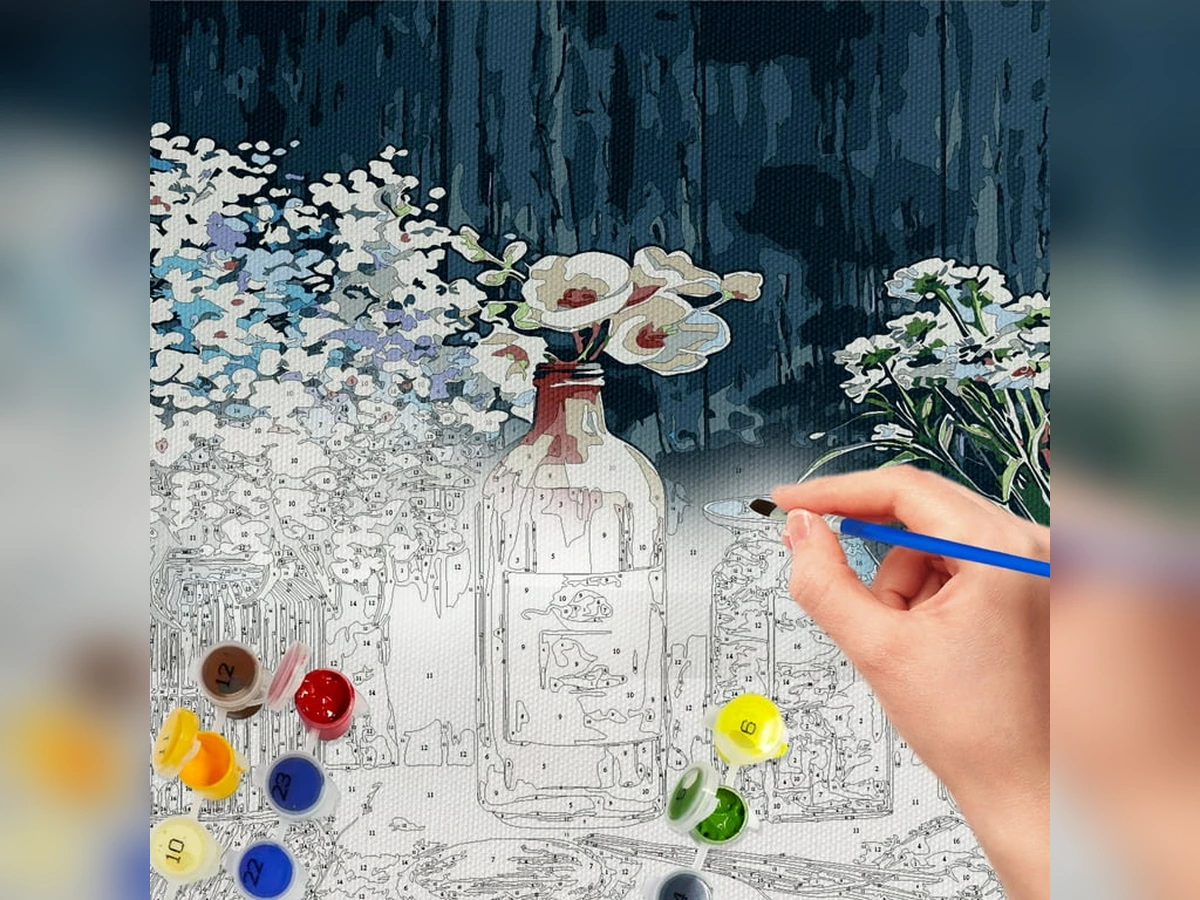
There’s a point in paint by numbers where things start to feel off. The early excitement has passed, but the image hasn’t come together yet. The canvas isn’t empty anymore, but it isn’t convincing either. Bits of color sit next to bare sections, numbers still showing through. At that stage, you’re left with something that’s clearly an unfinished painting, and sitting with it can feel more uncomfortable than starting ever did.
The awkward stage no one advertises
At this point, the canvas is usually a colorful patchwork. Some areas are filled. Others are still marked with numbers. Colors sit next to each other without context. Shapes that will eventually connect feel isolated and unfinished. If you step back, it can look worse than when you started. This is often where doubt creeps in. Not dramatic doubt, just a quiet question: Is this actually working? The reference image promises something coherent, but the painting hasn’t caught up yet. That gap between expectation and reality is where many people hesitate.

Why the middle feels heavier than the beginning
The beginning of a paint by numbers kit is forgiving. Everything is new. Progress is visible immediately. Filling the first few sections feels productive, even satisfying. By the middle, novelty has worn off. What remains is repetition, the same motions, the same decisions, the same pace. This is where the process stops offering reassurance and starts asking for patience. For many, this is the point where an unfinished painting gets set aside, not out of frustration, but because continuing suddenly feels less obvious than starting did.
When the image hasn’t earned your trust yet
Halfway through, the painting hasn’t proven itself. You’re still relying on the idea that it will eventually come together, rather than seeing it clearly. That requires a small amount of trust, not in skill, but in process. Some people keep going because curiosity outweighs uncertainty. Others pause because the uncertainty lingers. Neither response is wrong. They just reflect different comfort levels with work that hasn’t resolved itself yet.

What continuing actually looks like
For those who do return, something subtle shifts. You stop judging the canvas as a whole and focus instead on the next small area. One section at a time. One color. One number. The painting becomes a work in progress, rather than something you constantly evaluate. Ironically, this is often when the experience feels calmer. The pressure to see the full image fades, replaced by the rhythm of doing. The painting catches up later.
Why the middle matters more than the end
The finished painting gets the attention, but the middle is where habits form. This stage decides whether paint by numbers becomes something you return to or something you try once. It reveals how comfortable you are sitting with a work in progress, with something that exists without making sense yet. Many hobbies lose people here, not because they’re difficult, but because they don’t leave much room for uncertainty. Paint by numbers does, as long as you allow the middle to be what it is.

Letting a painting remain unfinished
There’s also an unspoken permission in the middle: you’re allowed to stop. Leaving an unfinished abstract painting on the table isn’t a failure. It’s part of how making things fits into real life, where attention moves and priorities shift. Some people return days later. Others weeks. Some never do. The experience still happened.
Seeing the middle differently
Once you’ve passed through this stage a few times, it becomes familiar. Less intimidating. You start to recognize the halfway point not as a problem, but as a phase. The painting doesn’t need to make sense yet. It will, eventually. Or it won’t. Either way, most of the time spent painting lives right here, in the middle, and learning to sit with that is part of the experience itself.